Quick answer: are op shop prices going up?
- Yes — prices are rising
- More demand + resale culture + rising costs = higher price tags
- But people who know where to look are still finding bargains
Here’s how to get old school op shop prices: track sales, hit multiple deals in one trip,
and shop only when it’s worth it — with the free Savi app.
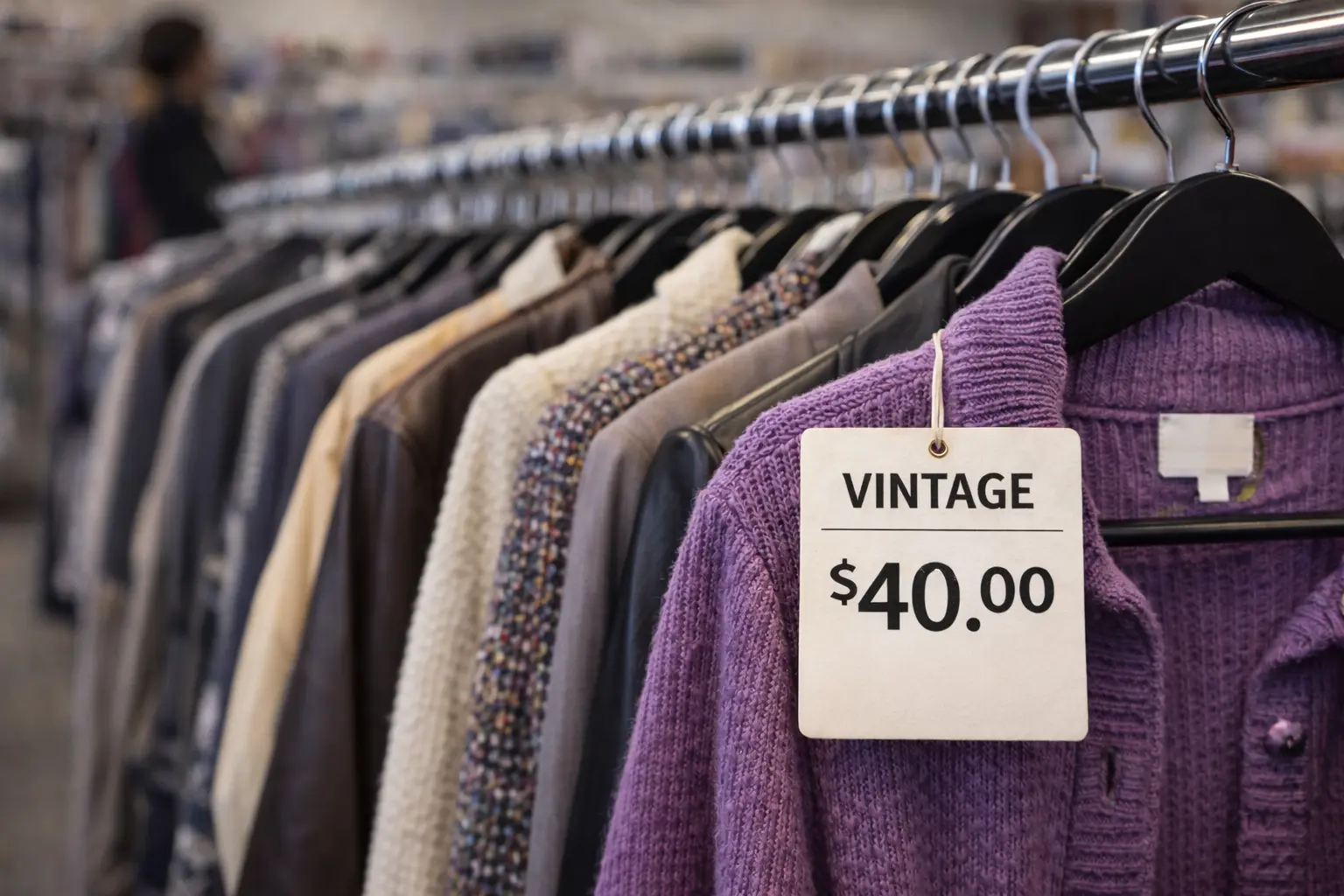
If you’ve walked into an op shop lately and done a double take at the price tag… you’re not imagining it. That $25 dress? The $15 Kmart top? The occasional “wait… isn’t that more than new?” moment? Yep — op shop prices are rising.
The Rise of Op Shopping
(And Why It’s Booming)
Op shopping isn’t niche anymore — it’s booming.
- Australia’s second-hand apparel market has grown from ~$396M in 2018 to ~$578M in 2024
- It’s projected to double again by 2032
- Around 70–75% of Australians have bought second-hand clothing in the past year
- Op shops are helping us save around $2 billion annually
More people than ever are thrifting — and loving it.
So Why Are Prices Going Up?
There’s no single reason — it’s a perfect storm of a few big shifts:
1. Demand has exploded
More people are op shopping than ever, which means more competition for the really good finds. Some stores have even seen customer numbers jump by 30–50% or more. And when demand goes up, prices tend to follow — especially for the best pieces.
2. Op shops have levelled up
Op shops aren’t what they used to be.
They’ve evolved from basic “opportunity shops” providing affordable clothing to those in need, into curated retail spaces — with styled racks, branded pieces, and boutique-style displays.
And with that shift?
Pricing is becoming more intentional.
Better items are now priced closer to what they’re actually worth — not just a flat, low-cost model.
Shop Smarter with Savi
Get sale alerts from op shops near you and never miss a great find.


3. The reseller effect is real
Let’s be honest — the “flip culture” is real. More people are op shopping with resale in mind, and stores know it.
So now, well-known brands, pieces with strong resale potential, or anything with a vintage edge are often priced with resale value factored in.

4. Fewer quality donations
A lot of the best pieces aren’t making it to op shops anymore.
Instead of donating, people are selling their higher-quality items on platforms like Depop and Marketplace. That means fewer premium brands and standout pieces hitting the racks.
At the same time, what is being donated is often more fast fashion — which doesn’t hold its value in the same way.
The result? Less high-quality stock overall… and higher prices on the good pieces when they do show up.
5. Rising costs
Op shops aren’t immune to inflation.
Rent, wages, transport — everything has gone up. From keeping the lights on to moving stock between stores, the cost of running a shop has increased across the board.
And while many rely on volunteers, there are still paid staff, logistics, and overheads to cover.
Even charities need to stay sustainable — and that reality is starting to show up in pricing.
6. Unsellable donations
Not everything that lands in an op shop makes it onto the rack.
A surprising amount is damaged, worn out, or simply unsellable — and dealing with it takes time and money. From sorting and storage to recycling or landfill fees, it all adds up.
And as fast fashion fills more donation bags, this problem is only getting bigger.
Those hidden costs don’t disappear — they get absorbed into pricing on the items that do sell.
7. Online competition
More shoppers are turning to online secondhand instead of browsing in-store.
With platforms like Depop, Facebook Marketplace, and eBay, it’s easier than ever to search, filter, and shop from home — and that convenience is hard to compete with.
That shift is starting to show up in the numbers.
Industry data from IBISWorld shows revenue declined by around 2.4% in 2024–25, partly due to growing competition from online resale platforms.
With tighter margins and more competition, op shops are becoming more strategic — both in what they stock and how they price it.

So How Do You Actually Find a Good Deal These Days?
This is where most people get stuck.
Yes, prices are rising — but not everywhere.
There are still plenty of op shops with amazing value…
they’re just harder to find.
Instead of guessing (and wasting time on overpriced racks), more people are starting to use tools that help them spot the good-value shops faster.
How People are Shopping
Smarter, Not Harder
One way people are getting around rising prices is by using apps like Savi to shop more strategically.
Instead of browsing at random, they’re getting alerts when nearby op shops are running sales — and only heading out when it’s actually worth it.
They’re also using the “Sales Only” filter on the Savi map to see exactly which shops have deals on that day, then planning their route around it.
That’s how people are still scoring insane bargains — timing their visits around 50% off sales, two-for-one deals, and those iconic $5 fill-a-bag days.
Never Pay Full Price Again
Get sale alerts from op shops near you and snag the best finds first.
Here’s the Reality Check
Despite the viral “$40 dress outrage” posts, the average item price still sits around $5.81, and Australian shoppers save an estimated $2 billion each year by choosing secondhand.
However, that average includes everything — clothes, books, toys, furniture, and homewares — many of which are still priced very low.
So while the numbers suggest prices haven’t shifted dramatically overall…
If you’re shopping for clothes, they’re definitely not as cheap as it used to be.
So What Does That Actually Mean?
Yes — prices have risen.
But op shopping is still one of the cheapest ways to shop overall — especially if you know how to spot a good find (or better yet, shop at the right time).
The reality is, op shops will never be able to compete with ultra-cheap fast fashion. They offer a different kind of value — better quality, more unique pieces, and a more sustainable way to shop.
The Trade-Off: Cheap vs Value
Let’s double click on that… A lot of people op shop for the cheap prices — totally fair. But when you zoom out, there’s a bigger picture.
The real value of op shopping isn’t just about saving money. It’s about reducing textile waste, giving clothes a longer life, supporting charities, and playing a part in the circular economy.
Because here’s the uncomfortable truth: Australians buy around 56 new clothing items a year on average — we’re among the biggest consumers of clothing in the world , even outpacing the U.S. on a per-person basis.
That’s a lot of fast fashion entering the system — and exactly why secondhand matters more than ever.
Our Take
Yes — rising prices can feel frustrating. But op shops aren’t just cheap clothing stores — they’re part of a much bigger solution. Even if a thrifted item costs a little more than it used to, it’s still helping to reduce waste, cut demand for fast fashion, and support community programs.
Buying ultra-cheap fast fashion may be a massive problem — but buying secondhand is part of the solution.
The Bottom Line
Op shopping is changing — but it’s not losing its magic. It’s just growing up. It’s shed its stigma and gone mainstream — which is exactly a move in the right direction.
It’s worth remembering that op shops in Australia generate hundreds of millions of dollars each year to fund community programs, from housing and crisis support to healthcare and job services.
So while the prices might not always feel like a $2 bargain anymore… the impact? Still priceless.
Read next: Curious about the real impact of op shopping? Check out our Global Op Shopping Stats — the numbers might surprise you.
References
- Credence Research. (2024). Australia Second-Hand Apparel Market Size & Forecast.
Australia Second-hand Apparel Market Size, Share and Forecast 2032 - Real Commercial News. Jane Rocca. (2025). How the humble op shop became a billion dollar industry
How the humble op shop became a billion dollar industry - ABC News. (2024). Coverage on rising op shop demand and cost-of-living trends.
Op shops report major spike in customers amid cost of living pressure, drive to sustainability – ABC News
More Australians are turning to op shops, but it’s not just the cost of living driving the trend : SA Police News, World Crime and Other News for South Australia - IBISWorld. (2025). Opportunity Shops Industry in Australia.
Opportunity Shops in Australia Industry Analysis, 2025 - Charitable Reuse Australia. (2025). Media Messaging for Op Shop Prices
https://.charitablereuse.org.au/wp-content/uploads/2025/07/Media-Messaging-2025-Op-Shop-Pricing.pdf - Australian Fashion Council. (2023). National Clothing Product Stewardship Scheme Data Report.
https://ausfashioncouncil.com/wp-content/uploads/2023/05/AFC-NCPSS-Data-Report.pdf - Charitable Reuse Australia. (2023–2024). Sector Impact Reports & Industry Data.
National-Reuse-Impact-Report-2025.pdf - ThredUp. (2024–2025). Resale Report.
https://www.thredup.com/resale - The Australia Institute Discussion Paper. (2024). Textiles Waste in Australia.
P1552 Textiles Waste in Australia
Sources: Australian Fashion Council, Charitable Reuse Australia, ThredUp Resale Report, IBISWorld, and Australian media reporting.